
Sunday, January 16, 2011

Saturday, January 08, 2011
I think Kanji is the perfect imperfection.
I was looking at the character "美", designed in a logo with all four horizontal strokes of equal length. Why do we not write them with equal lengths?
I know there will be many explanations, but maybe one of them would be that, to make for strokes of equal length look beautiful, they must be perfectly equal; otherwise, the closer you get to them being equal, the more obvious how unequal they are.
And as long as they are not perfectly equal, the effort to make them equal and the subsequent failure stands out. Making them not equal from the beginning results in a more acceptable result.
So Kanji were not designed for perfect strokes. In fact, I have been finding of late that print characters which strokes are very well weighed, lack character. After trying to write kanji characters that have - character, I came to a conclusion. That beautiful kanji handwriting is not getting all the strokes well weighed, but getting away with getting them decidedly off balance. Which means that within the inequality of the strokes, there has to be a certain visual justification for its imbalance. This visual justification causes they eyes to see the imbalance, yet forces the mind to interpret it as a balance, resulting in the "character".
That being said, in order to understand what strokes can justify imbalance, and what just makes the imbalance worse, one needs to first know what the character would have looked like if it were perfectly weighed.
And since every character is different in its spatial composition of strokes, every single character needs to be learnt one by one.
And that, is where the art lies.
I was looking at the character "美", designed in a logo with all four horizontal strokes of equal length. Why do we not write them with equal lengths?
I know there will be many explanations, but maybe one of them would be that, to make for strokes of equal length look beautiful, they must be perfectly equal; otherwise, the closer you get to them being equal, the more obvious how unequal they are.
And as long as they are not perfectly equal, the effort to make them equal and the subsequent failure stands out. Making them not equal from the beginning results in a more acceptable result.
So Kanji were not designed for perfect strokes. In fact, I have been finding of late that print characters which strokes are very well weighed, lack character. After trying to write kanji characters that have - character, I came to a conclusion. That beautiful kanji handwriting is not getting all the strokes well weighed, but getting away with getting them decidedly off balance. Which means that within the inequality of the strokes, there has to be a certain visual justification for its imbalance. This visual justification causes they eyes to see the imbalance, yet forces the mind to interpret it as a balance, resulting in the "character".
That being said, in order to understand what strokes can justify imbalance, and what just makes the imbalance worse, one needs to first know what the character would have looked like if it were perfectly weighed.
And since every character is different in its spatial composition of strokes, every single character needs to be learnt one by one.
And that, is where the art lies.
Monday, January 03, 2011
Watched Albert Bartlett's video about exponential growth.
Here's what it is in simple terms:
Since the video tells us to do the math and not take figures for granted, I went to try on my calculation on compound interest and this was the result:

Which allows me to conclude several things:
1. If we interpret the graph as resource depletion, it would be a representation of how long the human race to continue existing and stay in the game, given the rate of growth he is pursuing. Of course the only way to stay in the game forever with a constant growth would be a rate of 0 growth. Otherwise, we will need to match growth with recessions in order to have a net 0 growth.
2. If a stable civilization would require lifestyles to remain consistent over at least 1 lifespan (70 years) to ensure continuity, we're looking at something much smaller than 1% growth.
3. If it takes 1000 years for resources to be replenished, we can deplete up to half of all available resources at a growth rate of 0.069%, after which we will need to have another 1000 years of decline at the same rate.
4. Interest on savings is somewhere between 2% to 4%, which means it takes 17 to 35 years to double. If interest is nearer the 2% end and inflation is nearer the 4% end, prices would have overtaken you in the 17th year of your 35 year savings plan.
5. If we have growth rates over 2.3%, resource consumption doubles twice in each generation, which would probably make tradition unnecessary since situations would have changed beyond recognition. Every generation would have to invent its own lifestyle, since what took the father one lifetime (70 years) to master, would take the grandson just his first 17.5 years to master - which is by current standards, high-school.
Here's what it is in simple terms:
Let's say you have 1 million dollars.
You put it into investment which earns you 7% extra every year.
How much money will you have after 10 years?
The answer is 1 x 1.07 x 1.07 x 1.07 x 1.07 x 1.07 x 1.07 x 1.07 x 1.07 x 1.07 x 1.07, which is just a little under 2 million.
Yes, at 7% a year you can double your money in 10 years.
The same growth applies for resource consumption.
Since the video tells us to do the math and not take figures for granted, I went to try on my calculation on compound interest and this was the result:

Which allows me to conclude several things:
1. If we interpret the graph as resource depletion, it would be a representation of how long the human race to continue existing and stay in the game, given the rate of growth he is pursuing. Of course the only way to stay in the game forever with a constant growth would be a rate of 0 growth. Otherwise, we will need to match growth with recessions in order to have a net 0 growth.
2. If a stable civilization would require lifestyles to remain consistent over at least 1 lifespan (70 years) to ensure continuity, we're looking at something much smaller than 1% growth.
3. If it takes 1000 years for resources to be replenished, we can deplete up to half of all available resources at a growth rate of 0.069%, after which we will need to have another 1000 years of decline at the same rate.
4. Interest on savings is somewhere between 2% to 4%, which means it takes 17 to 35 years to double. If interest is nearer the 2% end and inflation is nearer the 4% end, prices would have overtaken you in the 17th year of your 35 year savings plan.
5. If we have growth rates over 2.3%, resource consumption doubles twice in each generation, which would probably make tradition unnecessary since situations would have changed beyond recognition. Every generation would have to invent its own lifestyle, since what took the father one lifetime (70 years) to master, would take the grandson just his first 17.5 years to master - which is by current standards, high-school.
Saturday, December 25, 2010
perhaps the greatest evolutionary advantage of society is not so much logistical but emotional, not in that it feels good, but that collectively the awakened mind can be taught that death is not an option; that the desire to survive is not something to be questioned. perhaps it is this advantage that allowed this race to so take over the earth?
Saturday, December 18, 2010
Tuesday, December 14, 2010
The 3 R's are said to be Reduce, Reuse, and Recycle.
But I think it's more lip service than anything. Cos to really think about ecology, one would need to consider all the factors involved in the reduction, the reusing, and the recycling. No one formula can fit it all.
I believe that the true answer to ecology lies in another set of 3 R's:
Reduce, Reduce, and Reduce.
Reduce Consumption
Once food is bought and cooked, it doesn't matter if you actually finish eating it or you throw it away. Once you have bought it, you are already responsible for having created the demand for that item. And it is demands that drive industries, and industries that really suck up resources. Yes, granted it will drive down the GDP. But GDP is by no means a measure of what makes living worth the while. If we want to really think about ecology, we need to re-access what we think will make our lives worth the living.
Reduce Advertisement
There will always be those with opinions and those who just follow. Advertisements are what make the latter follow, creating market demands where there is none, fulfilling desires that do not really exist. It creates profit by making people pay for what they do not really need, justifying resource usage through an artificially created demand. it's called "market trends", but if it were not advertisement, trends would have been very different. Digital electronics, luxury goods, branded goods, foreign goods - if the demand for these can slow down, "market trends" could possibly better reflect what people actually need to have, than what industries need to sell.
Reduce Population
I think the key factor to our collective environment footprint is simply our population. If we could cut population by 50%, we would cut emissions by 50%. Yes, it would cause a lot of social distress in the short term - but that is the same pain, we are currently inflicting on the environment! A larger population makes it necessary for structure in society, and therefore makes it more possible for people to exploit both the work force and the environment more systematically. If we simply had less people, the environment would probably be more forgiving. A smaller population does mean that we can specialize less, and our sciences would not be able to advance as quickly - but i think we've reached a level of specialization that has removed us too far from what is real - that isn't a problem in itself, but the fact that real-world limitations exist, is. If we had a smaller population and our current society can continue into such a world, we can put more of our energies into agricultural and medical sciences instead of military technology and consumer electronics, into solving social and existential problems than twittering and stock exchange.
And yes, it would mean that I should reduce my blogging too.
But for me, writing is part of the bare minimum that i need to stay alive.
But I think it's more lip service than anything. Cos to really think about ecology, one would need to consider all the factors involved in the reduction, the reusing, and the recycling. No one formula can fit it all.
I believe that the true answer to ecology lies in another set of 3 R's:
Reduce, Reduce, and Reduce.
Reduce Consumption
Once food is bought and cooked, it doesn't matter if you actually finish eating it or you throw it away. Once you have bought it, you are already responsible for having created the demand for that item. And it is demands that drive industries, and industries that really suck up resources. Yes, granted it will drive down the GDP. But GDP is by no means a measure of what makes living worth the while. If we want to really think about ecology, we need to re-access what we think will make our lives worth the living.
Reduce Advertisement
There will always be those with opinions and those who just follow. Advertisements are what make the latter follow, creating market demands where there is none, fulfilling desires that do not really exist. It creates profit by making people pay for what they do not really need, justifying resource usage through an artificially created demand. it's called "market trends", but if it were not advertisement, trends would have been very different. Digital electronics, luxury goods, branded goods, foreign goods - if the demand for these can slow down, "market trends" could possibly better reflect what people actually need to have, than what industries need to sell.
Reduce Population
I think the key factor to our collective environment footprint is simply our population. If we could cut population by 50%, we would cut emissions by 50%. Yes, it would cause a lot of social distress in the short term - but that is the same pain, we are currently inflicting on the environment! A larger population makes it necessary for structure in society, and therefore makes it more possible for people to exploit both the work force and the environment more systematically. If we simply had less people, the environment would probably be more forgiving. A smaller population does mean that we can specialize less, and our sciences would not be able to advance as quickly - but i think we've reached a level of specialization that has removed us too far from what is real - that isn't a problem in itself, but the fact that real-world limitations exist, is. If we had a smaller population and our current society can continue into such a world, we can put more of our energies into agricultural and medical sciences instead of military technology and consumer electronics, into solving social and existential problems than twittering and stock exchange.
And yes, it would mean that I should reduce my blogging too.
But for me, writing is part of the bare minimum that i need to stay alive.
Wednesday, December 08, 2010
The downside to any system is vulnerability to exploitation.
That would apply to computer systems, systems of reasoning, judicial systems, political systems, philosophies and religions, sciences and arts. In short, everything. Systems necessarily require that we take a certain approach to categorize and rationalize phenomena so that at various levels of detail, it becomes possible for one single person to grasp - or rather, to think that he can grasp - the whole picture. This would necessarily imply that the way we look at the whole picture, may or may not be in line with the "certain approach" used to form it. When it does, we become heroes of the system, allowing us to make it better by searching out inconsistencies. When it doesn't, we become the inconsistencies - we reveal how the system is incomplete, but the system is unable to come to terms with us, because it is unwilling to acknowledge that someone abused the system to create such systematic discrimination, or that the inconsistency does not lie in us, but in the system itself.
We have thought that a system of checks and balances would help to steer systems, but after half a century of democracy, corruption hasn't gone away.
There are two forms of exploitations - internal and external. Internal from those who are in line with the system, and external from those that the system works against. Both ways require an intimate understanding of the system. And both ways need to play the "game" as set by the system to come into conversation.
What about those of us who don't want to play the game?
Is there a way to opt out of the system?
Leaving a religion at some point in history must have been unthinkable.
As must be leaving a country.
Is it possible for a society to offer alternative societies for people to live in, if they decide that the main machinery cannot understand them? What are the sub-societies that are present in the big machinery of society?
Perhaps it is in this lack of alternatives that organized crimes and underground societies exist. In this light, the underground society is but a mirror-image of the high society, which too, uses the society for its selfish gain.
What if we established a world order where society and non-society exist side by side? In between countries, we have a stretch of territory that is no man's land, where every man lives for himself.
but even if we were to separate order from anarchy, those who live in the wild, will find ways to organize, so that he can too, exploit a new system. order and chaos are two sides of the same coin. remember that the outlaw knows the system as well as the governors. of course, if there were a limitless supply of territories, people can keep on moving out and refuse to be part of such systems. but we live in a closed world.
What we need then, is not a system, but a framework where different systems can exist together, allowing people to move from system to system. War and peace and everything in between, would exist at the same time within such a framework.
While such a framework too, will suffer the same problems, but I would like to think that such a system could possibly give people enough systems to work with, that it never becomes necessary for anyone to want to opt out of the whole framework altogether.
That would apply to computer systems, systems of reasoning, judicial systems, political systems, philosophies and religions, sciences and arts. In short, everything. Systems necessarily require that we take a certain approach to categorize and rationalize phenomena so that at various levels of detail, it becomes possible for one single person to grasp - or rather, to think that he can grasp - the whole picture. This would necessarily imply that the way we look at the whole picture, may or may not be in line with the "certain approach" used to form it. When it does, we become heroes of the system, allowing us to make it better by searching out inconsistencies. When it doesn't, we become the inconsistencies - we reveal how the system is incomplete, but the system is unable to come to terms with us, because it is unwilling to acknowledge that someone abused the system to create such systematic discrimination, or that the inconsistency does not lie in us, but in the system itself.
We have thought that a system of checks and balances would help to steer systems, but after half a century of democracy, corruption hasn't gone away.
There are two forms of exploitations - internal and external. Internal from those who are in line with the system, and external from those that the system works against. Both ways require an intimate understanding of the system. And both ways need to play the "game" as set by the system to come into conversation.
What about those of us who don't want to play the game?
Is there a way to opt out of the system?
Leaving a religion at some point in history must have been unthinkable.
As must be leaving a country.
Is it possible for a society to offer alternative societies for people to live in, if they decide that the main machinery cannot understand them? What are the sub-societies that are present in the big machinery of society?
Perhaps it is in this lack of alternatives that organized crimes and underground societies exist. In this light, the underground society is but a mirror-image of the high society, which too, uses the society for its selfish gain.
What if we established a world order where society and non-society exist side by side? In between countries, we have a stretch of territory that is no man's land, where every man lives for himself.
but even if we were to separate order from anarchy, those who live in the wild, will find ways to organize, so that he can too, exploit a new system. order and chaos are two sides of the same coin. remember that the outlaw knows the system as well as the governors. of course, if there were a limitless supply of territories, people can keep on moving out and refuse to be part of such systems. but we live in a closed world.
What we need then, is not a system, but a framework where different systems can exist together, allowing people to move from system to system. War and peace and everything in between, would exist at the same time within such a framework.
While such a framework too, will suffer the same problems, but I would like to think that such a system could possibly give people enough systems to work with, that it never becomes necessary for anyone to want to opt out of the whole framework altogether.
Sunday, November 28, 2010

Saturday, November 27, 2010

Thursday, November 25, 2010
The internet has always held a certain intrigue for me in the way websites both growing and abandoned exist side-by-side, allowing it to be instantly both a market and a museum. One click, and you are in center-stage; another, you're in a ghost-town. It has been so from the time of Geocities, up to the time of blogger. But Facebook is the first site that recolored that landscape for me - it does essentially the same, except what it does it to is not places, but people.
As Facebook plays a bigger part in our social lives, sooner or later we have messages that will never get replied, pokes that will not be returned, and friend requests that cannot be accepted, not because someone isn't approving of us, but because someone just isn't there anymore.
Just as the internet has abstracted physical distances but not excused us from the realities of energy consumption, I cannot say if Facebook has de-anthropomorphized death, or made it more personal.
As Facebook plays a bigger part in our social lives, sooner or later we have messages that will never get replied, pokes that will not be returned, and friend requests that cannot be accepted, not because someone isn't approving of us, but because someone just isn't there anymore.
Just as the internet has abstracted physical distances but not excused us from the realities of energy consumption, I cannot say if Facebook has de-anthropomorphized death, or made it more personal.
Friday, November 19, 2010

Saturday, November 06, 2010
Language forms the basis for abstract thought. While I do not think that it is the only possibly way for abstract thought, it is the tool human beings have chosen.
We tend to say "the language of art" and "the language of science" - where do these meet?
Language provides two features - one to refer to concrete entities, and another to denote the intangible relationships between these entities. The former puts entities into our cognition, while the later gives form to the abstract. Let's call the former the "concrete" function of language and the later, the "abstract" function.
IMHO, "Art" tends to use the concrete to explain the abstract;
"science" tends to use the abstract to explain the concrete.
"Art" relies on experiences as proofs of the abstract. It is subjective and local. It keeps track of the material surroundings, in order for us to enrich our immaterial being.
"Science" relies on hypothesis and theories as proofs of the concrete. It is universal but removed. It builds not the world, but a representation of the world, in order for us to access our material world.
Which is to say, while "art" has always been depicted to dominate the "spiritual" realm, I would say that "art" is how we access the "spiritual" realm through the physical world, while "science" is how we access the physical world through the "spiritual" realm.
And I think some languages are better suited for science, while others are better suited for art.
Firstly because the vocabulary each language provides, limit what we can in the first place, perceive.
The cultural backdrop surrounding each language then builds up what we can reason.
Certain ideas are more difficult to explain in certain languages than others.
The same idea, may in some languages be expressed as a noun,and in others, as an adjective or a verb.
The form these ideas are expressed directly affect the complexity of the idea to the speaker, and that in turns limits the complexities of the acrobatics we can perform juggling it in our mind.
For me, Japanese is an art language. Nouns are preferred over verbs. There seems to be an obsession to noun-ify everything, and place it firmly into the perception. How the relationships between these nouns are expressed, on the other hand, is often ambiguous.
English, on the other hand, is a science language. Existing nouns are modified with adjectives, but these phrases do not always become an atomic idea in the mind. This makes it necessary for a lot of ideas to be explained, since something that cannot be represented as one single word is difficult to be treated as an endpoint in an argument.
For example "correct answer" is an atomic word 正解 in Japanese, and thus cannot be further broken down. In English, we can extend it into a new idea such as "correct non-answer", which might be used to describe an argument that is in itself correct, but does not address the key issue. Such a development would not arise from "正解".
In English, words like "shooting star" and "living room" are not handled the same way in the mind as "growing economy" and "dining experience". Partly it is because the former is used often enough that the mind groups them into atomic ideas, but also because the two words that form each of the former, mean something quite different from the phrases they form when put together. However, English as a language does not offer a grammatical construct to differentiate between the two.
Japanese however, does. A non-atomic idea would be "流れる星" (star which is shooting) while an atomic idea would be "流れ星" (shooting star). The former is an adjectival verb + noun, whereas the latter is one single noun. Noun-ifying ideas is a cultural obsession, and used in marketing and popular culture.
Chinese used to have this capability but, unfortunately, it is defunct in contemporary Chinese. For example, the atomic word "然" meaning "as it is" or "as so", is coupled with "自" meaning "self" to mean "natural" (自然=as it is itself), and paired with "必" meaning necessary to mean "inevitable" (必然=necessarily so). But a phrase such as "非然" which in classical Chinese means "not so" (非=not), no longer makes any sense in contemporary Chinese. This makes it necessary to rote-learn all the phrases that are acceptable in the Chinese language; the meaning of individual Chinese characters do not necessary have real applicative value to the speaker.
Which is to say that not all languages are equal, when judged in the light of specific applications. But I think their diversity represents the diversity of human thought, and that in turn, is a key to the resilience of the human species, in a snake-eat-rat world.
We tend to say "the language of art" and "the language of science" - where do these meet?
Language provides two features - one to refer to concrete entities, and another to denote the intangible relationships between these entities. The former puts entities into our cognition, while the later gives form to the abstract. Let's call the former the "concrete" function of language and the later, the "abstract" function.
IMHO, "Art" tends to use the concrete to explain the abstract;
"science" tends to use the abstract to explain the concrete.
"Art" relies on experiences as proofs of the abstract. It is subjective and local. It keeps track of the material surroundings, in order for us to enrich our immaterial being.
"Science" relies on hypothesis and theories as proofs of the concrete. It is universal but removed. It builds not the world, but a representation of the world, in order for us to access our material world.
Which is to say, while "art" has always been depicted to dominate the "spiritual" realm, I would say that "art" is how we access the "spiritual" realm through the physical world, while "science" is how we access the physical world through the "spiritual" realm.
And I think some languages are better suited for science, while others are better suited for art.
Firstly because the vocabulary each language provides, limit what we can in the first place, perceive.
The cultural backdrop surrounding each language then builds up what we can reason.
Certain ideas are more difficult to explain in certain languages than others.
The same idea, may in some languages be expressed as a noun,and in others, as an adjective or a verb.
The form these ideas are expressed directly affect the complexity of the idea to the speaker, and that in turns limits the complexities of the acrobatics we can perform juggling it in our mind.
For me, Japanese is an art language. Nouns are preferred over verbs. There seems to be an obsession to noun-ify everything, and place it firmly into the perception. How the relationships between these nouns are expressed, on the other hand, is often ambiguous.
English, on the other hand, is a science language. Existing nouns are modified with adjectives, but these phrases do not always become an atomic idea in the mind. This makes it necessary for a lot of ideas to be explained, since something that cannot be represented as one single word is difficult to be treated as an endpoint in an argument.
For example "correct answer" is an atomic word 正解 in Japanese, and thus cannot be further broken down. In English, we can extend it into a new idea such as "correct non-answer", which might be used to describe an argument that is in itself correct, but does not address the key issue. Such a development would not arise from "正解".
In English, words like "shooting star" and "living room" are not handled the same way in the mind as "growing economy" and "dining experience". Partly it is because the former is used often enough that the mind groups them into atomic ideas, but also because the two words that form each of the former, mean something quite different from the phrases they form when put together. However, English as a language does not offer a grammatical construct to differentiate between the two.
Japanese however, does. A non-atomic idea would be "流れる星" (star which is shooting) while an atomic idea would be "流れ星" (shooting star). The former is an adjectival verb + noun, whereas the latter is one single noun. Noun-ifying ideas is a cultural obsession, and used in marketing and popular culture.
Chinese used to have this capability but, unfortunately, it is defunct in contemporary Chinese. For example, the atomic word "然" meaning "as it is" or "as so", is coupled with "自" meaning "self" to mean "natural" (自然=as it is itself), and paired with "必" meaning necessary to mean "inevitable" (必然=necessarily so). But a phrase such as "非然" which in classical Chinese means "not so" (非=not), no longer makes any sense in contemporary Chinese. This makes it necessary to rote-learn all the phrases that are acceptable in the Chinese language; the meaning of individual Chinese characters do not necessary have real applicative value to the speaker.
Which is to say that not all languages are equal, when judged in the light of specific applications. But I think their diversity represents the diversity of human thought, and that in turn, is a key to the resilience of the human species, in a snake-eat-rat world.
Thursday, October 21, 2010
MY VIEW OF THE WORLD
Given an idea

how do different cultures interpret and absorb it?
AMERICAN
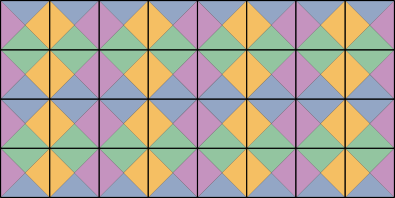
Layers. Each idea is dissected and fit into a specific layer, allowing entire layers to be moved freely. Interfaces between layers are standardized so one can ignore the small details and think about it at an abstract level, making way for scalability.
JAPANESE
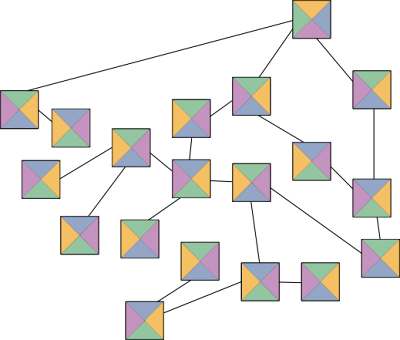
Craft. Drop the idea anywhere you want, but make intelligent, consistent connections so that the whole picture is connected. Mastering the details is the bottom line, and everything is seen through the tinted glass of the nature of these "consistent connections". Very painstaking, but it creates people who are highly skilled at handling a wide array of ideas. Of course, ideas not consistent with the nature of the connections used, will not be connected - not that they are rejected - let's just imagine they don't exist.
CHINESE
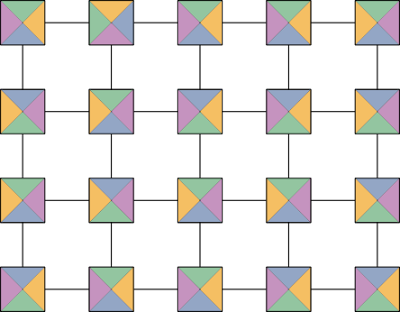
Structure. Drop it anywhere you like, as long as it fits into the grid. Highly scalable and able to absorb any kind of ideas. The whole picture is so colorful and exciting sometimes you forget the rigidity behind the grid.
Wider European

Interest groups. Similar ideas are tightly knit together, but different ideas simply exist side by side. Of course that leads to an imbalance in powers - it's not the raw numbers that matter; it's the representation that counts.
INDIAN
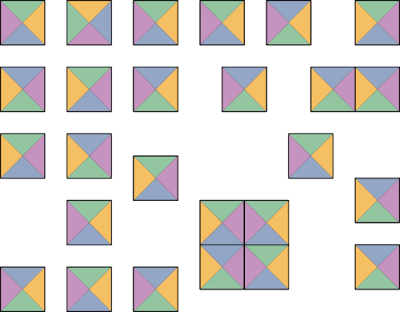
Let it be. Similar ideas form groups naturally. Different ideas form their own relationships. There's no one single idea that binds everything together. Diversity is the key factor of resilience.
FRENCH
Egality. Let's abstract it up to a level where everything looks the same, then we can give everybody the same rights.
ENGLISH

Anything that doesn't look like the French will do.
Given an idea

how do different cultures interpret and absorb it?

Layers. Each idea is dissected and fit into a specific layer, allowing entire layers to be moved freely. Interfaces between layers are standardized so one can ignore the small details and think about it at an abstract level, making way for scalability.

Craft. Drop the idea anywhere you want, but make intelligent, consistent connections so that the whole picture is connected. Mastering the details is the bottom line, and everything is seen through the tinted glass of the nature of these "consistent connections". Very painstaking, but it creates people who are highly skilled at handling a wide array of ideas. Of course, ideas not consistent with the nature of the connections used, will not be connected - not that they are rejected - let's just imagine they don't exist.

Structure. Drop it anywhere you like, as long as it fits into the grid. Highly scalable and able to absorb any kind of ideas. The whole picture is so colorful and exciting sometimes you forget the rigidity behind the grid.

Interest groups. Similar ideas are tightly knit together, but different ideas simply exist side by side. Of course that leads to an imbalance in powers - it's not the raw numbers that matter; it's the representation that counts.

Let it be. Similar ideas form groups naturally. Different ideas form their own relationships. There's no one single idea that binds everything together. Diversity is the key factor of resilience.

Egality. Let's abstract it up to a level where everything looks the same, then we can give everybody the same rights.

Anything that doesn't look like the French will do.
Sunday, October 17, 2010

Saturday, October 09, 2010
「縁」
If you toss a coin once, you will get either a head, or a tail.
If you toss it twice, maybe you can get both a head and a tail, but there is still a big possibility that you end up with all heads or all tails.
If you toss it three times, you get a better chance of getting both heads and tails. The chances of getting all heads or all tails is much smaller, but the distribution is memoryless.
And if you can toss it an infinite number of times, you will get both heads and tails.
And that is to me what evolution is. A near-infinite number of attempts at life, so that we cover just about every permutation possible, effectively lowering the risk of extermination by an acceptable threshold of threats. Okay "every permutation" is a exaggeration, but that is the basis of why i believe a property of the world is its immense richness.
Within this richness, is it possible to match one animal/person to another such that they function well together? If I have a sample set of 20 people, I can't say for sure. But if I am given the theoretical infinity, then yes.
Is the theoretical infinity possible?
In the macro scale, yes. But on the micro scale, no.
On the macro scale, we see it in nature, how certain species form symbiotic relationships with another. Given enough time, the species works out what it needs.
But that process is not worked out by one generation, or for one creature.
Which is to say, if you ask me if you will meet the person of your life, I will say, maybe yes, maybe no.
But if everybody can reproduce an infinite number of fuzzy copies* of themselves, the possibility becomes very high, and all that is left is for those copies to meet.
And that chance of meeting and forming a meaningful relationship, on the basis that a theoretical infinite number of variations are available, creates the situation where the two persons/creatures can decide to make something out of it.
This is for me, the definition of 「縁」.
*I think this is the mistaken basis why a lot of people want to have children, and have their children be similar to themseles. Cool it, let nature do its work.
If you toss a coin once, you will get either a head, or a tail.
If you toss it twice, maybe you can get both a head and a tail, but there is still a big possibility that you end up with all heads or all tails.
If you toss it three times, you get a better chance of getting both heads and tails. The chances of getting all heads or all tails is much smaller, but the distribution is memoryless.
And if you can toss it an infinite number of times, you will get both heads and tails.
And that is to me what evolution is. A near-infinite number of attempts at life, so that we cover just about every permutation possible, effectively lowering the risk of extermination by an acceptable threshold of threats. Okay "every permutation" is a exaggeration, but that is the basis of why i believe a property of the world is its immense richness.
Within this richness, is it possible to match one animal/person to another such that they function well together? If I have a sample set of 20 people, I can't say for sure. But if I am given the theoretical infinity, then yes.
Is the theoretical infinity possible?
In the macro scale, yes. But on the micro scale, no.
On the macro scale, we see it in nature, how certain species form symbiotic relationships with another. Given enough time, the species works out what it needs.
But that process is not worked out by one generation, or for one creature.
Which is to say, if you ask me if you will meet the person of your life, I will say, maybe yes, maybe no.
But if everybody can reproduce an infinite number of fuzzy copies* of themselves, the possibility becomes very high, and all that is left is for those copies to meet.
And that chance of meeting and forming a meaningful relationship, on the basis that a theoretical infinite number of variations are available, creates the situation where the two persons/creatures can decide to make something out of it.
This is for me, the definition of 「縁」.
*I think this is the mistaken basis why a lot of people want to have children, and have their children be similar to themseles. Cool it, let nature do its work.
Tuesday, September 28, 2010
It is such a beautiful night tonight.
The rain has stopped
And the trees are rustling over a new gossip in the wind.
From my balcony
I can hear leaves being dragged along the ground by the breeze
Dancing to the mood, though not the rhythm
Of the crickets' incessant calls.
One has to wonder
Whose work it is that the crickets manage to so bring to life
Breathing a tranquility that is not silence into the night sky
Still tinted with a hint of pink.
Further away, I hear cars driving by
Not the roar of rush hour
But rather like the song of the crickets
Whose voices, each singing a very short counter-melody,
Weave together a complex polyphony that is at the same time intriguing and quiet.
It must be the eighteenth day of the lunar calendar;
It's strange to see a moon halfway to a half moon
Look so beautiful against an uncertain blue.
I am tempted to think it impolite to stare at a moon
Changing out of her ceremonial robes, but she sits unmoving, brighter at one edge,
Like a raw tear-shaped gem, back lit,
Adorning the Autumn sky.
There is something about the song of the crickets
It's the loudest thing I can hear tonight
Except when it is interrupted by the occasional hum of vehicles a distance away.
Yet, unlike the soft but insistent mumbling of the rotating electrical fan next door,
The more I try to follow the most identifiable melody and put myself into its sound
The more my ears tell me that I don't hear anything at all.
I was taught to identify instruments when listening to an orchestral work
But this night is full of sounds I don't know how to identify
But I suspect this is what a twenty-four bar rest really sounds like.
I can hear my neighbor packing something into a bag,
And it brings to me memories
of Grandma, packing things on a night
Just days before the Lunar New Year.
Like a nostalgic scent
Reconstructing in my mind a memory I did not see with my eyes
For a moment, part of me, is not quite here.
From time to time, the wind would be strong enough
To make the wind chime ring
Once, Twice, like a clock
Announcing the passing of an hour
As irregular as our memories that mark the years.
The rain has stopped
And the trees are rustling over a new gossip in the wind.
From my balcony
I can hear leaves being dragged along the ground by the breeze
Dancing to the mood, though not the rhythm
Of the crickets' incessant calls.
One has to wonder
Whose work it is that the crickets manage to so bring to life
Breathing a tranquility that is not silence into the night sky
Still tinted with a hint of pink.
Further away, I hear cars driving by
Not the roar of rush hour
But rather like the song of the crickets
Whose voices, each singing a very short counter-melody,
Weave together a complex polyphony that is at the same time intriguing and quiet.
It must be the eighteenth day of the lunar calendar;
It's strange to see a moon halfway to a half moon
Look so beautiful against an uncertain blue.
I am tempted to think it impolite to stare at a moon
Changing out of her ceremonial robes, but she sits unmoving, brighter at one edge,
Like a raw tear-shaped gem, back lit,
Adorning the Autumn sky.
There is something about the song of the crickets
It's the loudest thing I can hear tonight
Except when it is interrupted by the occasional hum of vehicles a distance away.
Yet, unlike the soft but insistent mumbling of the rotating electrical fan next door,
The more I try to follow the most identifiable melody and put myself into its sound
The more my ears tell me that I don't hear anything at all.
I was taught to identify instruments when listening to an orchestral work
But this night is full of sounds I don't know how to identify
But I suspect this is what a twenty-four bar rest really sounds like.
I can hear my neighbor packing something into a bag,
And it brings to me memories
of Grandma, packing things on a night
Just days before the Lunar New Year.
Like a nostalgic scent
Reconstructing in my mind a memory I did not see with my eyes
For a moment, part of me, is not quite here.
From time to time, the wind would be strong enough
To make the wind chime ring
Once, Twice, like a clock
Announcing the passing of an hour
As irregular as our memories that mark the years.
Autumn is just an idea
not so much of a season
as it is a period of change between Summer and Winter
which anchor the chain of fleeting moments that just happen to lie in between
just as how Life happens between the two perennial mountains of Birth and Death.
we always use the four seasons as an analogy for Life,
and choose Death to be its opposite.
But if Birth were to be the opposite of Death,
Life would be one single season of change
the next season would seem convincingly its purpose and destination
we forget that all four seasons
inextricably must happen at the same instant, somewhere out there
somewhere out there
someone is born
someone dies
and someone arrives
without having to try
not so much of a season
as it is a period of change between Summer and Winter
which anchor the chain of fleeting moments that just happen to lie in between
just as how Life happens between the two perennial mountains of Birth and Death.
we always use the four seasons as an analogy for Life,
and choose Death to be its opposite.
But if Birth were to be the opposite of Death,
Life would be one single season of change
the next season would seem convincingly its purpose and destination
we forget that all four seasons
inextricably must happen at the same instant, somewhere out there
somewhere out there
someone is born
someone dies
and someone arrives
without having to try
Tuesday, September 14, 2010
i think one amazing thing about the body is that it was built to live, and built to die. That in the same body was a full package that included what was needed to do cell division, organ formation, puberty, recovery from sickness, reproduction, aging, and death - and every single function is a wonder. every function brings with it not just a biological process, but also a psychological process. the way our bodies change directly affects the way we think, and therefore the way be see the world and make decisions.
i think that this is nature's kindest invention. so that in our youth we will go out and do all sorts of reckless things and push our limits, and when our strength slows down, we change and desire different things. it helps us live our age. i think being able to live one's age is a great gift, because no matter how fast our brains can work, we take time to adjust emotionally. Living our age allows us to adjust bit by bit as our bodies change through its seasons.
simple, isn't it? the toddle ready to walk, the youth ready to run, the adult ready to fly, the wise ready to teach, the aged ready to encourage, and those at the end of the road - ready to die.
Yet one whole lifetime, is sometimes not enough for some of us to learn.
i think that this is nature's kindest invention. so that in our youth we will go out and do all sorts of reckless things and push our limits, and when our strength slows down, we change and desire different things. it helps us live our age. i think being able to live one's age is a great gift, because no matter how fast our brains can work, we take time to adjust emotionally. Living our age allows us to adjust bit by bit as our bodies change through its seasons.
simple, isn't it? the toddle ready to walk, the youth ready to run, the adult ready to fly, the wise ready to teach, the aged ready to encourage, and those at the end of the road - ready to die.
Yet one whole lifetime, is sometimes not enough for some of us to learn.
Monday, September 13, 2010
Sunday, September 12, 2010
Capitalism is beautiful in that it sums up all organizational objectives into the optimization of one single variable - profit.
Profit can be affected by costs, access to supply and availability of demand. Demand drives the demand for demand - and causes marketing and advertising to stimulate, as well as create demand. This causes a lot of people to want things they don't need. This excessive consumption is what causes a strain on the natural balance of things around us - the main one being the Environment.
I think stimulated demands are not healthy. Neither for the planet, nor on a personal level. People end up spending their lives chasing things that they don't really want. I think it is fair to win over a competitor's market, or to open up a new market with a new product that answers an undiscovered need. But to create a desire for a good where there is no real need, is plainly profiting on the goodness of the earth.
There is just so much resources on earth. If someone needs to get really rich, someone's gotta give. And now Nature's giving, and giving too much.
Profit can be affected by costs, access to supply and availability of demand. Demand drives the demand for demand - and causes marketing and advertising to stimulate, as well as create demand. This causes a lot of people to want things they don't need. This excessive consumption is what causes a strain on the natural balance of things around us - the main one being the Environment.
I think stimulated demands are not healthy. Neither for the planet, nor on a personal level. People end up spending their lives chasing things that they don't really want. I think it is fair to win over a competitor's market, or to open up a new market with a new product that answers an undiscovered need. But to create a desire for a good where there is no real need, is plainly profiting on the goodness of the earth.
There is just so much resources on earth. If someone needs to get really rich, someone's gotta give. And now Nature's giving, and giving too much.
Subscribe to:
Posts (Atom)